
Table of Contents
- 2026 Mohave County Real Estate At-A-Glance
- The Evolution of the Mohave County Housing Market into 2026
- Meet Your Mohave County Experts: The Hassell Team AZ
- Transparency and Data Sources
- Factor 1: Implementation of the 2025 Mohave County General Plan
- Factor 2: The Manufactured vs. Stick-Built Inventory Shift
- Factor 3: The Tri-State Economic Engine and Tourism
- Factor 4: Understanding Property Taxation and Assessor Data Mohave County property taxes are determined by the Assessor’s Limited Property Value (LPV) calculations, which historically lag behind growing market values to protect homeowners from sudden tax spikes. Understanding this distinction is crucial for buyers who often confuse assessed value with market potential. The official guide on understanding your assessor, property values and taxation clarifies that while market values may fluctuate based on supply and demand, the LPV increase is legally capped, providing a predictable expense forecast for owners.
- Factor 5: Climate and Cost-of-Living Migration Patterns
- The ‘Dirt-and-All’ Reality: What National Portals Get Wrong About Mohave County
- Frequently Asked Questions About Mohave County Real Estate
- Market Limitations and Risk Factors for 2026
- Navigating Your 2026 Move with The Hassell Team
2026 Mohave County Real Estate At-A-Glance
Key Takeaway: Market Stability and Strategic Growth
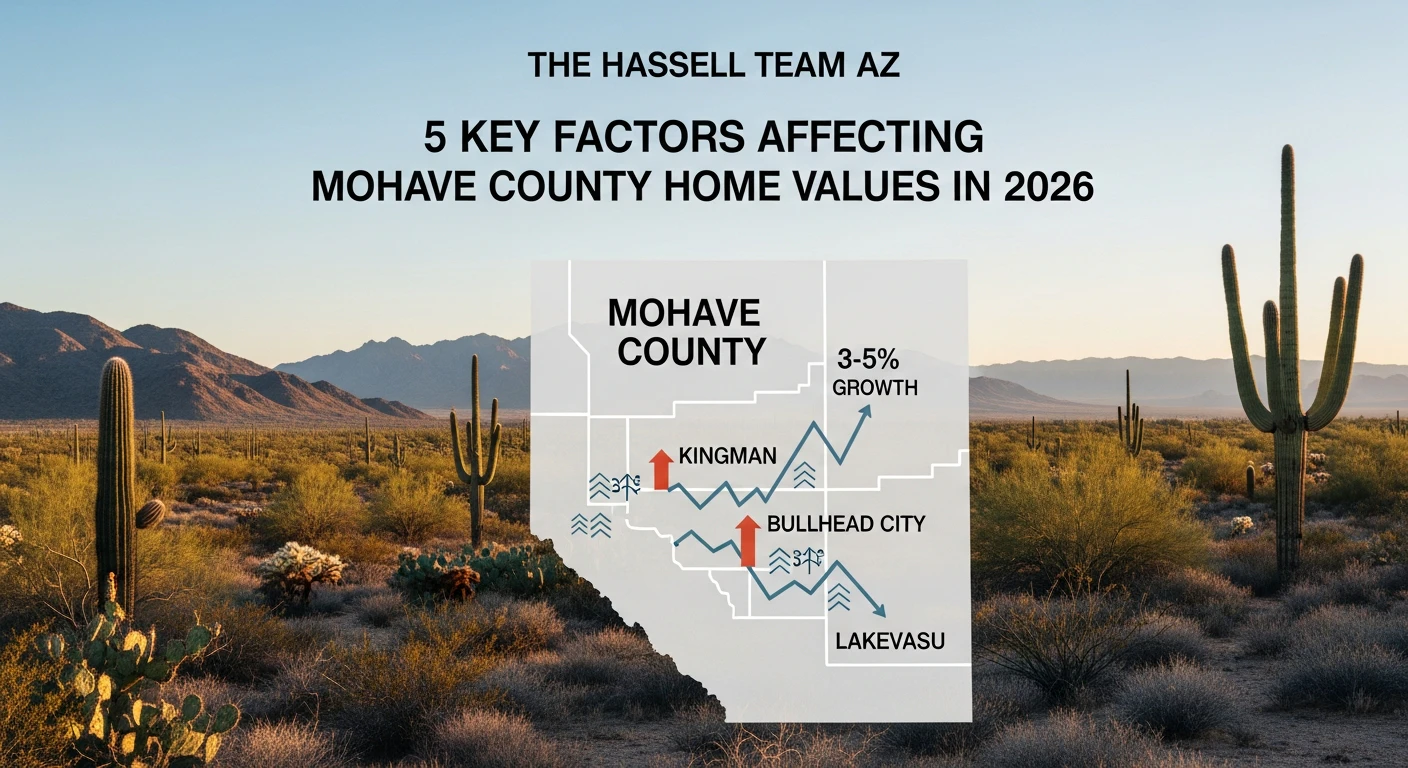
- The 2026 forecast for Mohave County indicates a resilient market characterized by moderate growth rather than volatility.
- Appreciation Rates: Conservative estimates place year-over-year growth between 3% and 5%, outpacing national averages in rural sectors.
- Inventory Mix: A critical balance between affordable HUD-code manufactured housing and custom stick-built developments is stabilizing entry-level prices.
- Regional Leadership: Bullhead City continues to emerge as a value leader due to its Tri-State economic integration.
- Regulatory Impact: The full adoption of the 2025 General Plan is streamlining zoning for higher-density residential projects in key corridors.
The Evolution of the Mohave County Housing Market into 2026
The Mohave County housing market has evolved from the frenetic bidding wars of the early 2020s into a more calculated, equity-driven landscape for 2026. While national headlines often paint a broad picture of cooling, our local market’s unique geography—bordering California and Nevada—creates a distinct micro-economy that resists general downturn trends. The burning question, “What is the housing market forecast for Mohave County in 2026?”, is best answered by looking at the stabilization of inventory levels and the normalization of days-on-market.
In previous years, scarcity drove prices indiscriminately; today, value is driven by specific amenities, location within flood zones, and property condition. Investors and residents alike are finding that while the rapid double-digit spikes have tempered, the floor for pricing remains high due to consistent demand from retirees and remote workers. This shift represents a maturation of the market, where long-term value holds precedence over short-term speculation.
Meet Your Mohave County Experts: The Hassell Team AZ
We are The Hassell Team AZ, a family crew of real estate professionals affiliated with Keller Williams Arizona Living Realty, dedicated to serving the unique needs of Mohave County residents. Led by Arianna Romero, a lifelong local, we bring decades of “dirt-and-all” experience to every transaction, meaning we understand the gritty details of septic inspections, flood plains, and desert terrain that out-of-town agents often overlook.
Our expertise spans the full spectrum of local real estate, from navigating the complexities of HUD-code manufactured home titles to marketing luxury custom stick-built properties on the river. Unlike algorithm-driven national portals, we provide hands-on guidance grounded in the reality of living and working in this community. We believe in transparency, hard work, and treating every client like a neighbor—because eventually, you will be.
Transparency and Data Sources
The projections and analysis provided in this article are based on a synthesis of official county documentation, historical financial reports, and current market activity. Specifically, we utilize data from the Mohave County Assessor, the 2025 Mohave County General Plan, and independent appraisal records.
Please note that real estate markets are subject to economic variables and unforeseen shifts. While this content represents our expert opinion and analysis of current trends, it should not be interpreted as a legal guarantee of future value. We encourage all buyers and sellers to consult with professionals for their specific situations.
Factor 1: Implementation of the 2025 Mohave County General Plan
The implementation of the 2025 Mohave County General Plan is the primary regulatory driver shaping land availability and density allowances for 2026. This comprehensive document outlines the county’s long-term vision for land use, directly influencing property values by designating specific zones for residential expansion versus commercial development. According to the plan, updated land-use designations are set to alleviate housing shortages by permitting higher-density developments in previously rural-residential zones near Kingman and Bullhead City.
This regulatory shift is critical for understanding Mohave County property value trends for 2026. By streamlining the path for new infrastructure, the county is effectively increasing the supply of buildable lots, which helps moderate land prices while simultaneously boosting the value of existing developed homes due to improved area amenities. The plan emphasizes the “orderly growth” of communities, ensuring that water resources and transportation networks keep pace with new construction.
For homeowners, this means that properties located within these newly targeted growth corridors may see accelerated appreciation as new roads and utilities are established. Conversely, rural properties protected from high-density zoning will retain their value through scarcity and privacy. Understanding these zoning nuances is essential, and it’s a key part of how we help clients answer What is My Home Worth? – Hassell Team AZ.
Factor 2: The Manufactured vs. Stick-Built Inventory Shift
The 2026 market is defined by a distinct inventory split between affordable manufactured housing and traditional stick-built homes, each adhering to different valuation metrics. In Mohave County, manufactured homes are not just a temporary housing solution but a substantial portion of the permanent housing stock, regulated strictly under HUD Part 3280 standards. This segment provides essential affordability, keeping the entry-level market active even as interest rates fluctuate.
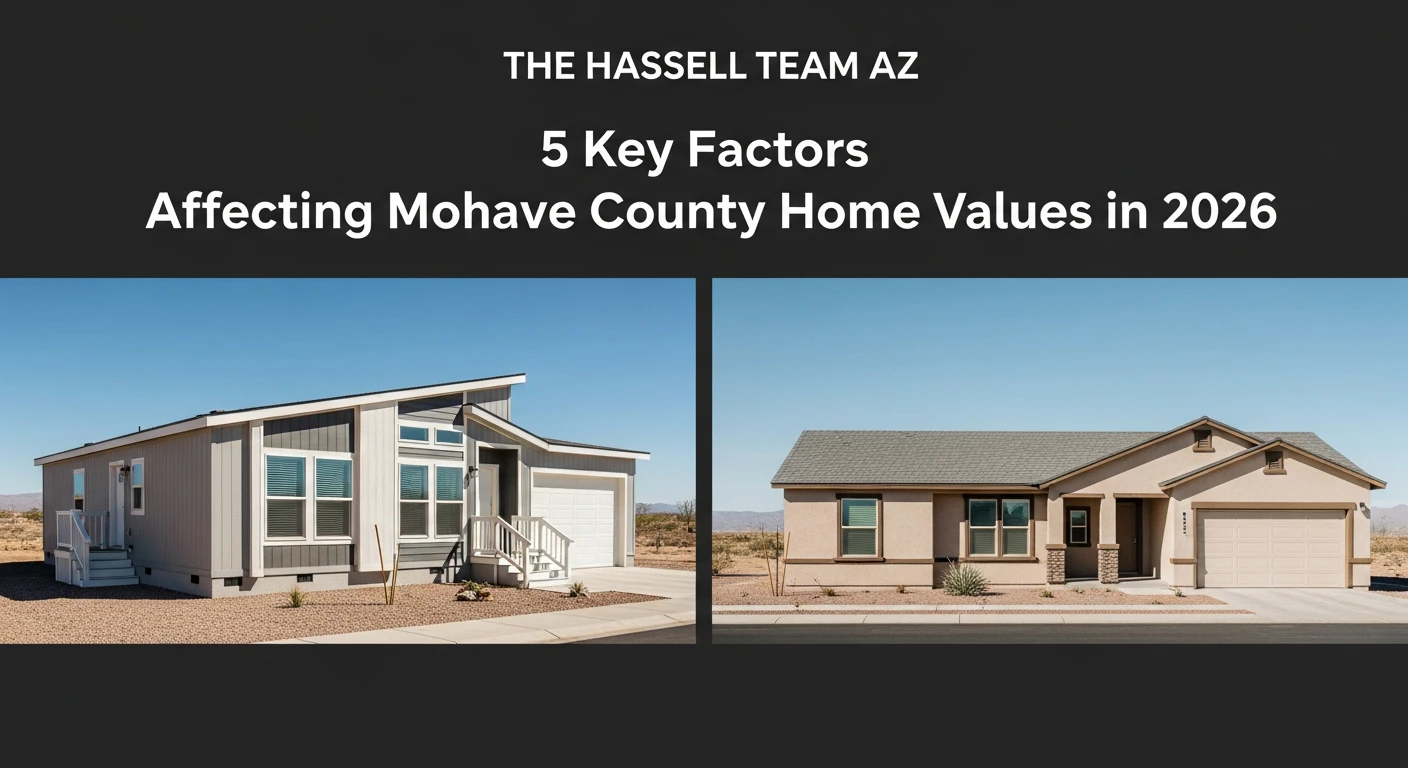
Stick-built homes, governed by ARS Title 32 and local building codes, command a premium but face stiffer competition from high-quality modern manufactured units. The “new build” inventory in Bullhead City is particularly pivotal; as construction costs for traditional homes rise, the price gap between stick-built and manufactured homes widens, driving more buyers toward high-end manufactured options. This dynamic creates a “price floor” for stick-built homes, preventing significant depreciation.
To maximize value in this competitive environment, homeowners often look to improvements. For insights on which upgrades yield the best returns, read our guide on hassellteamaz.com/blog/remodeling-projects-that-will-boost-your-homes-value. Whether it’s adding a garage to a manufactured home or updating the HVAC in a stick-built property, strategic renovations are key to standing out in the 2026 inventory.
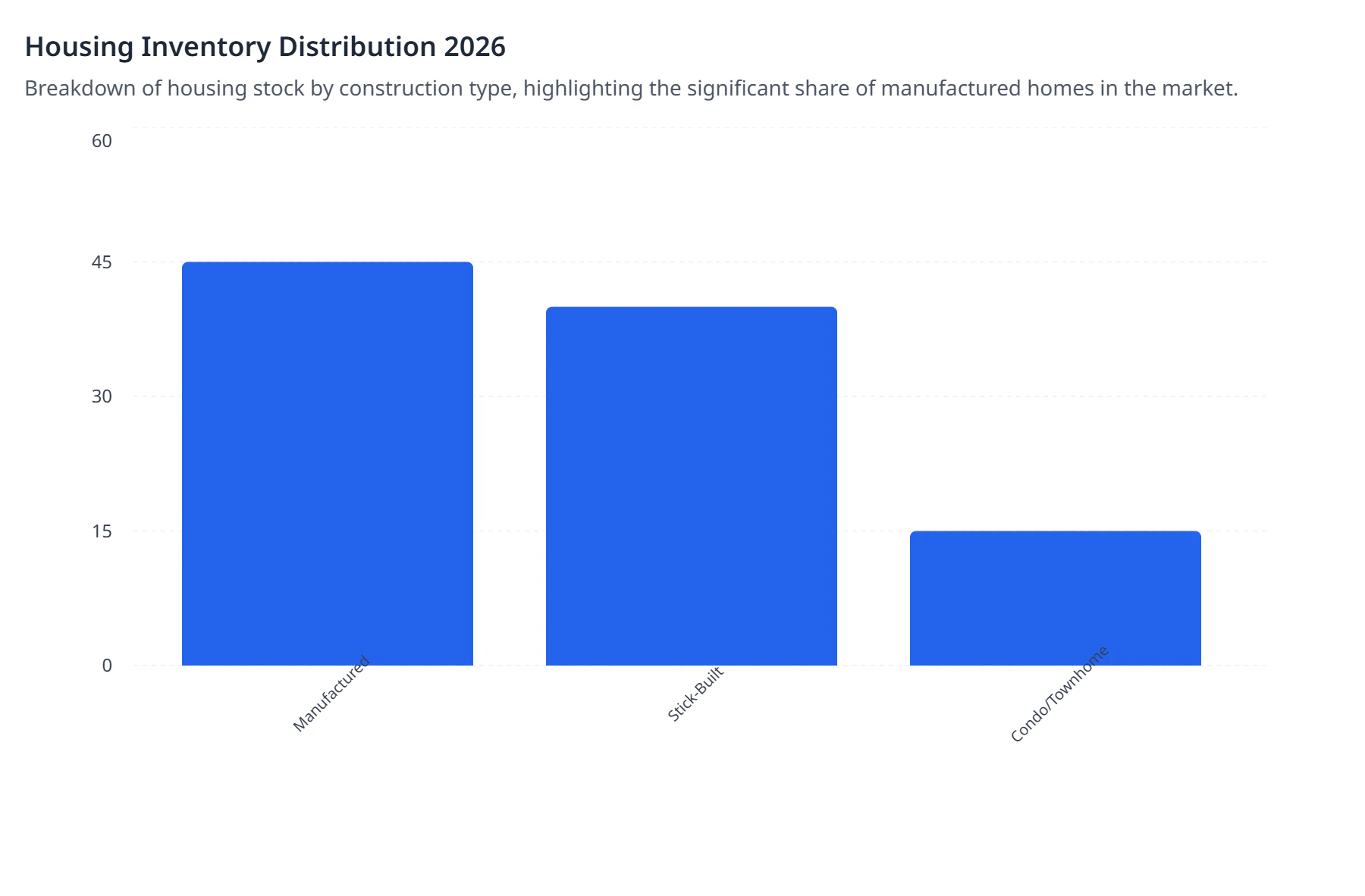
Breakdown of housing stock by construction type, highlighting the significant share of manufactured homes in the market.
Factor 3: The Tri-State Economic Engine and Tourism
The unique economic interplay between Mohave County, Southern Nevada, and Southeastern California acts as a powerful stabilizer for local home values. This “Tri-State” engine is fueled by the tourism and service industries of Laughlin and the growing remote-work population settling in Bullhead City. Historical trends from the Mohave County June 30, 2020 Annual Financial Report established a baseline of resilience, showing steady tax base growth even during periods of broader economic uncertainty.
In 2026, this economic diversification is more vital than ever. The “River Life” tourism sector continues to drive demand for vacation rentals and second homes, keeping pressure on inventory in riverfront communities. Additionally, recent Data from the county’s economic development department indicates a sustained rise in small business formation, further supporting local employment and housing demand.

Factor 4: Understanding Property Taxation and Assessor Data Mohave County property taxes are determined by the Assessor’s Limited Property Value (LPV) calculations, which historically lag behind growing market values to protect homeowners from sudden tax spikes.
Understanding this distinction is crucial for buyers who often confuse assessed value with market potential. The official guide on understanding your assessor, property values and taxation clarifies that while market values may fluctuate based on supply and demand, the LPV increase is legally capped, providing a predictable expense forecast for owners.
For 2026, we advise clients to look beyond the tax bill when estimating equity. The gap between the Assessor’s Full Cash Value (FCV) and the actual transaction prices in neighborhoods like Bullhead City can be significant. A professional Comparative Market Analysis (CMA) is the only reliable way to gauge true value. If you are considering selling, you can review our recent successes on the Sold Properties – Hassell Team AZ page to see how assessed values compared to final sale prices.
Factor 5: Climate and Cost-of-Living Migration Patterns
Migration patterns in 2026 are heavily influenced by the “California Exodus,” with retirees and working families seeking refuge from high taxes and living costs. Mohave County offers a climate and cost-of-living profile that is increasingly attractive to the 28-65 demographic looking for a higher quality of life. This migration is not just about cheaper houses; it’s about lifestyle preservation.
The demand from this demographic creates a robust “move-up” market. Buyers are selling high-equity homes in coastal states and purchasing larger properties or homes with extensive amenities (RV garages, pools) in Arizona. This influx supports price stability even if local wages remain static. For those wondering about the timing of their move, our article on hassellteamaz.com/blog/signs-that-now-is-the-time-to-sell-your-home explores the specific indicators that suggest a favorable seller’s market.
The ‘Dirt-and-All’ Reality: What National Portals Get Wrong About Mohave County
National real estate portals often fail to account for the hyper-local “dirt-and-all” factors that drastically alter property value in the Mojave Desert. Algorithms can track square footage and zip codes, but they cannot quantify the value of a septic system’s condition, the orientation of a home relative to the summer sun, or the specific flood zone designation of a lot. In our market, two identical homes on the same street can vary in value by $50,000 simply because one has a permitted RV hookup and the other does not.
Specific non-standard features — shop-garages, RV hookups, boat-deep garages, or proximity to state land — require manual adjustments that automated valuation models miss. In neighborhoods like Desert Lakes versus Sunridge Estates, three buyer-priority factors consistently drive premium pricing: proximity to the river (under a 5-minute drive), three-plus bedrooms for family resale viability, and a three-car or boat-deep garage for the river-recreation lifestyle. Properties meeting all three sell faster and command higher premiums in 2026.
We often see “Zestimates” that are wildly off-base because they treat a manufactured home on a leased lot the same as one on fee-simple land. This is where local expertise becomes non-negotiable. We dig into the dirt—literally—to ensure you aren’t overpaying for a property with hidden issues or underselling a home with unique, high-value attributes.
Frequently Asked Questions About Mohave County Real Estate
Will home values decrease in 2026?
Current data and the 2025 Mohave County General Plan suggest that home values will not decrease but rather stabilize or appreciate modestly (3-5%). The persistent housing shortage and steady migration from California provide a strong buffer against significant price drops.
What three factors drive premium pricing in Mohave County’s river-market neighborhoods?
Across our Mohave County riverfront closings, three buyer-priority factors consistently drive premium pricing: proximity to the Colorado River (typically under a 5-minute drive), three-plus bedrooms for family resale viability, and a three-car or boat-deep garage for the river-recreation lifestyle. Properties meeting all three command higher premiums and sell faster than comparable listings without those features. (Note: this is The Hassell Team’s local observation, not a formal industry rule.)
Are property values going down in Arizona?
While some luxury markets in Phoenix may see cooling, Mohave County operates on a different economic cycle. Due to its affordability relative to the rest of the state and the West Coast, property values here remain resilient. The entry-level and mid-range markets are particularly strong.
What are the four factors that influence value in real estate?
The four primary factors are Economic (employment, wages), Social (demographics, migration), Governmental (zoning, taxes), and Environmental (climate, location). In 2026, the Governmental factor (General Plan) and Social factor (migration) are the most dominant in our region.
Are manufactured homes a good investment in Mohave County?
Yes, especially when owning the land (fee-simple). Modern HUD-code homes offer excellent quality at a lower price point. With the rising cost of stick-built construction, manufactured homes maintain strong resale value, particularly those on permanent foundations.
Market Limitations and Risk Factors for 2026
While the forecast is positive, prudent buyers and sellers must acknowledge specific risks inherent to the 2026 market, including water resource management and interest rate volatility. Arizona’s ongoing discussions regarding groundwater management areas (GMAs) could impact development in outlying rural areas, potentially stalling appreciation for properties without secured water rights. Additionally, if interest rates spike unexpectedly, the “move-up” buyer segment could pause, temporarily cooling the mid-to-high-end market.
However, these risks also present opportunities. Areas with established infrastructure, like central Bullhead City and Kingman, become “safe harbors” for investment. Buyers priced out of the riverfront market can find incredible value in Kingman, where the entry price is significantly lower, offering a hedge against market fluctuations.
Navigating Your 2026 Move with The Hassell Team
Navigating the 2026 Mohave County real estate market requires more than just browsing listings; it demands a strategy based on data, local regulation awareness, and boots-on-the-ground experience. The five factors outlined here—from the General Plan implementation to the nuances of manufactured inventory—will shape every transaction in the coming year. Whether you are selling a family estate or buying your first desert home, understanding these drivers is the key to maximizing your equity.
If you are ready to understand exactly how these 2026 trends apply to your specific property, we invite you to Start Your Search with our family crew today. We are here to help you make your next move with confidence.